
IFRS 9

IFRS 9 Impact on Qatari Banking Capital and Provisions

The implementation of IFRS 9 (International Financial Reporting Standard 9) has fundamentally reshaped the financial landscape for Qatari banks. By shifting from a reactive “incurred loss” model to a proactive Expected Credit Loss (ECL) framework, the standard has significantly altered how banks manage their capital and report provisions. 1. How has the shift to Expected […]

IFRS 9 Challenges for Banks and Financial Institutions in Singapore

The implementation of IFRS 9 Financial Instruments (adopted in Singapore as SFRS(I) 9) has fundamentally reshaped the financial reporting landscape for banks and financial institutions (FIs). While the standard has been in effect for several years, evolving market conditions, stricter regulatory scrutiny from the Monetary Authority of Singapore (MAS), and rapid technological shifts continue to […]

SFRS(I) 9 vs IFRS 9: Differences and Adoption in Singapore

In the world of Singaporean finance, the shift to SFRS(I) 9 represented a landmark transition toward global transparency. While the names “SFRS(I) 9” and “IFRS 9” are often used interchangeably, understanding the specific context of Singapore’s adoption is crucial for businesses operating in the Lion City. As of 2026, Singapore remains fully committed to this […]

IFRS 9 Compliance for Singapore Banks

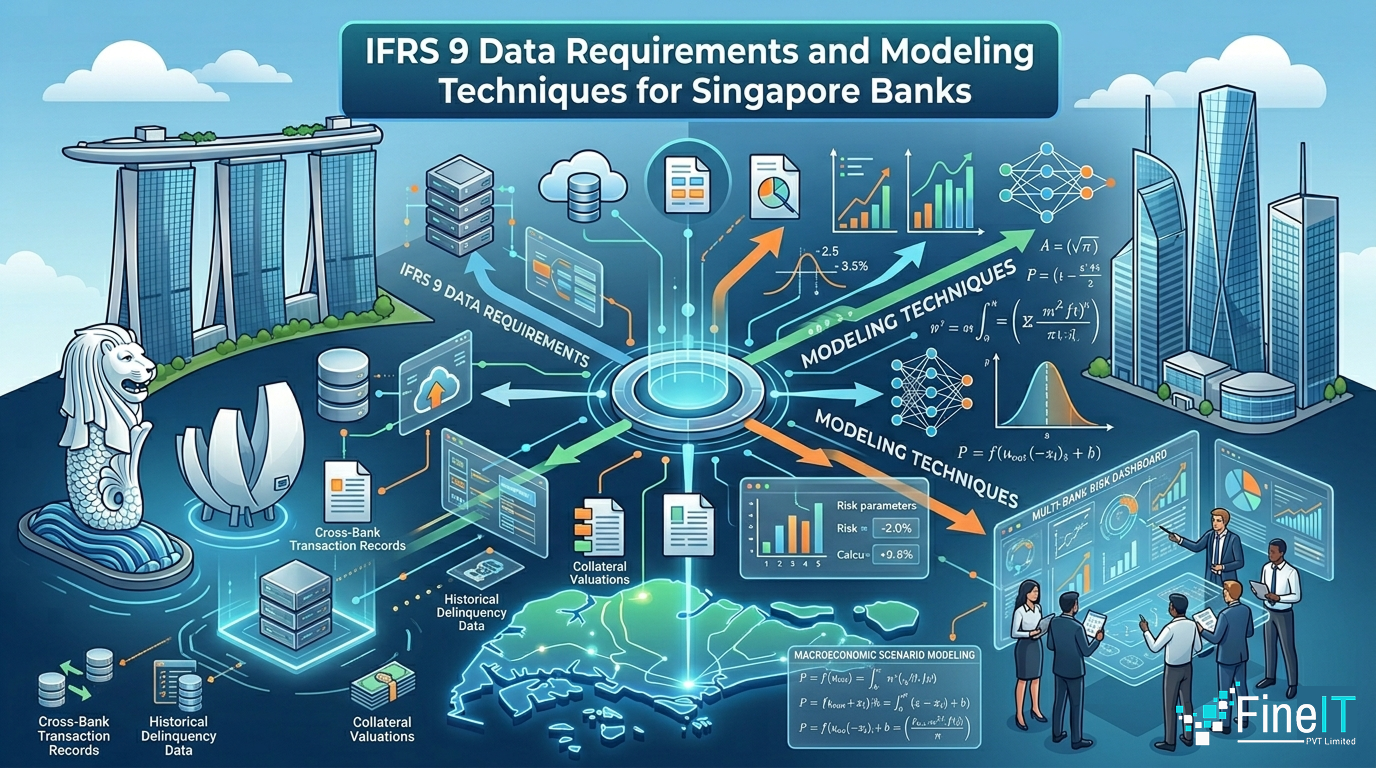
The adoption of IFRS 9 – Financial Instruments has fundamentally changed how banks in Singapore recognize, measure, and report credit risk. This standard replaced IAS 39, introducing a forward-looking Expected Credit Loss (ECL) framework that requires banks to estimate potential losses before defaults occur. For Singapore banks, compliance with IFRS 9 is not just an […]

Challenges in Implementing IFRS 9 in Nepal

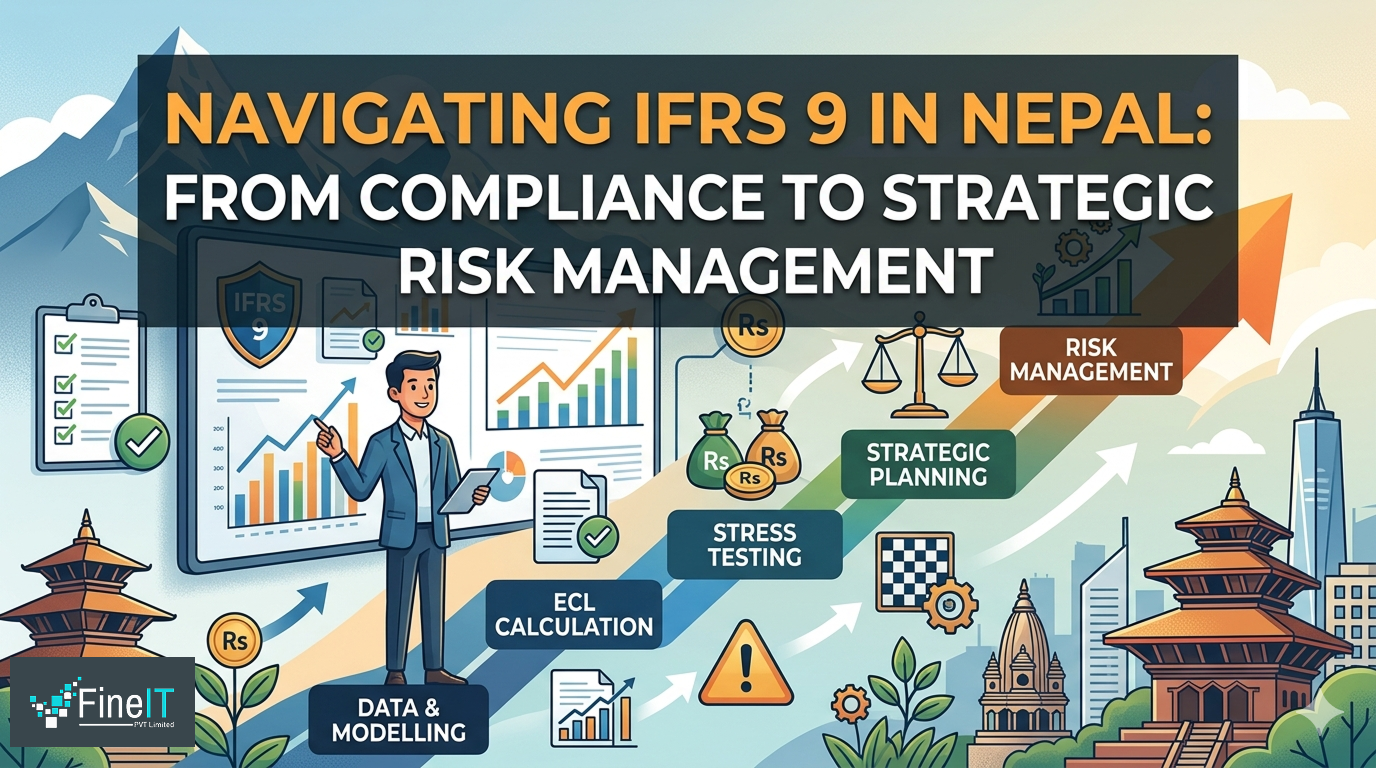
The transition to NFRS 9 (the Nepal Financial Reporting Standard aligned with IFRS 9) represents a seismic shift for the Nepalese banking sector. While the Nepal Rastra Bank (NRB) initially planned for earlier adoption, the full implementation of the Expected Credit Loss (ECL) model was deferred to the 2081/82 fiscal year (starting mid-July 2024) to […]

Data and Reporting Requirements for IFRS 9 in Nepal

Implementing the International Financial Reporting Standard 9 (IFRS 9)—localized as NFRS 9 in Nepal—marks a paradigm shift for the country’s financial landscape. As mandated by the Nepal Rastra Bank (NRB), this standard moves banks from a reactive “incurred loss” model to a proactive “Expected Credit Loss” (ECL) framework. The transition is data-intensive, requiring financial institutions […]

Impact of IFRS 9 on Capital Adequacy in Nepal Banks

The transition from the traditional “incurred loss” model to the International Financial Reporting Standard 9 (IFRS 9)—locally implemented as NFRS 9—marks a paradigm shift for the Nepalese banking sector. As Nepal Rastra Bank (NRB) pushes for full compliance by 2025/2026, the primary concern for stakeholders is how this accounting change will squeeze the Capital Adequacy […]

Scroll to top