
Author : Muzammal Rahim

IFRS 9 and Asset Quality Management in Nepalese Banks: A Critical Review

The adoption of International Financial Reporting Standards (IFRS 9) implemented locally via the Nepal Financial Reporting Standards (NFRS) represents a paradigm shift in financial accounting and risk assessment for the Nepalese banking sector. Moving away from the traditional, backward-looking “incurred loss model,” IFRS 9 mandates a forward-looking Expected Credit Loss (ECL) framework. This critical review […]

Transitioning to IFRS 9: Challenges and Opportunities for the Nepalese Banking Sector

The transition to International Financial Reporting Standard 9 (IFRS 9) represents a major shift for the Nepalese banking sector, moving from the traditional “incurred loss” model to a forward-looking “Expected Credit Loss” (ECL) framework. As the Nepal Rastra Bank (NRB) continues to strengthen its prudential norms and risk-based supervision, understanding the implications of IFRS 9 […]

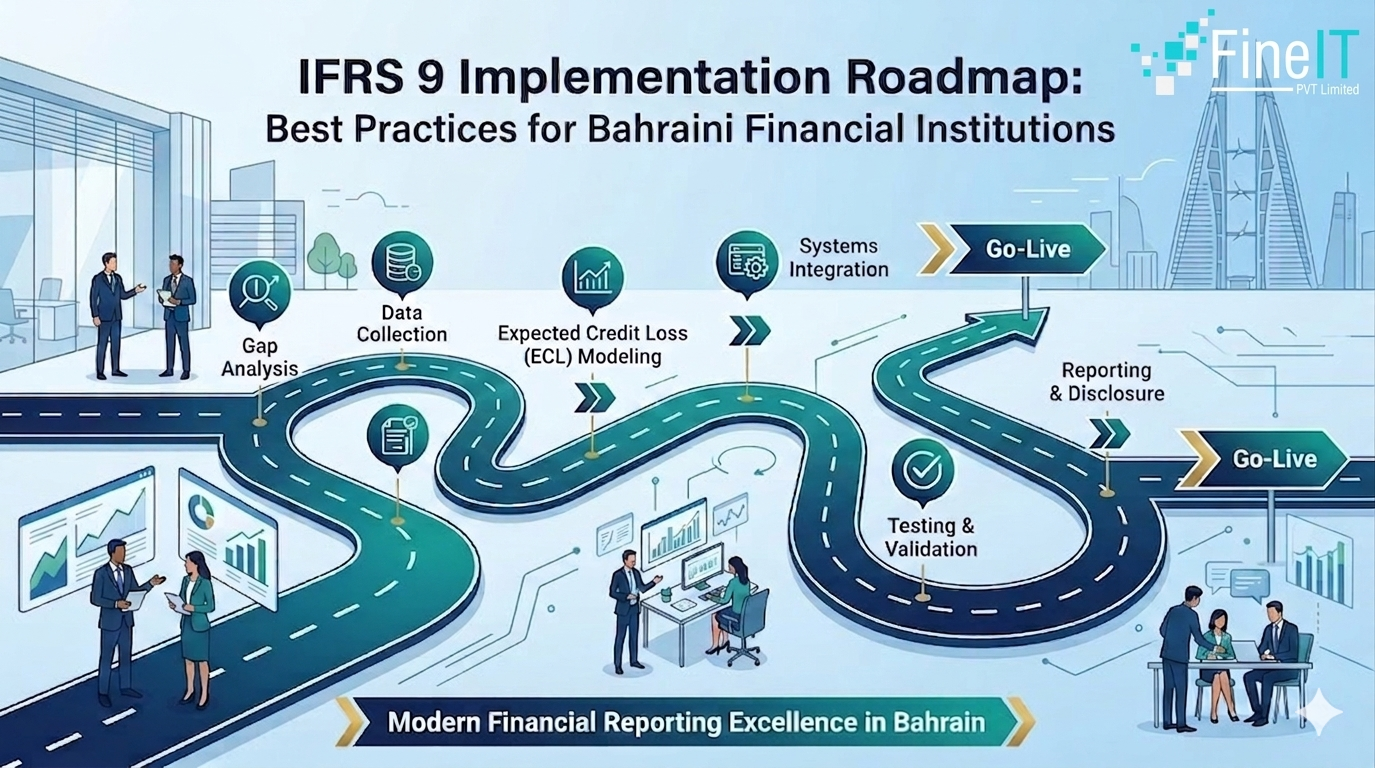
IFRS 9 Implementation Roadmap: Best Practices for Bahraini Financial Institutions

The implementation of IFRS 9 represents a fundamental shift from the previous “incurred-loss” model under IAS 39 to a forward-looking “Expected Credit Loss” (ECL) framework. For Bahraini financial institutions, which operate within a sophisticated environment balancing conventional and Islamic finance, this transition is critical for maintaining regulatory compliance with the Central Bank of Bahrain (CBB) […]

IFRS 16: Transforming Lease Accounting for Modern Businesses

In today’s business environment, lease accounting is no longer just a compliance exercise. It has become a strategic financial process that directly impacts balance sheets, financial transparency, investor confidence, and operational decision-making. The introduction of IFRS 16 fundamentally changed how organizations recognize and report leases. Companies that once managed leases through spreadsheets and manual calculations […]

Beyond Compliance: Unlocking Value with IFRS 9

The implementation of IFRS 9 represents a fundamental shift in how financial health is assessed and managed. Rather than waiting for a default event to occur, the ECL framework requires institutions to incorporate past events, current conditions, and reasonable forecasts of future economic scenarios (Azhar, 2022). This structural change offers several avenues for value creation: […]

IFRS 17 Simplified: Actuarial Intelligence by FineIT

The transition to IFRS 17 (Insurance Contracts) represents one of the most significant shifts in insurance accounting history, moving from a deferral and matching approach to a valuation-based framework. To address the complexities of this transition, FineIT a quantitative advisory firm to the International Accounting Standards Board (IASB) developed Estimator 17, a platform often described […]

FineIT Guide to IFRS 9: Smarter Credit Risk & ECL Strategies

The implementation of International Financial Reporting Standard 9 (IFRS 9) has fundamentally shifted credit risk management from a retrospective “incurred loss” model to a proactive, forward-looking Expected Credit Loss (ECL) framework. For financial institutions, this transition is no longer just a compliance task but a critical strategy for capital preservation and financial resilience. The Core […]

Mastering IFRS 9 with FineIT: From Compliance to Competitive Advantage

The shift from the “incurred loss” model of IAS 39 to the Expected Credit Loss (ECL) framework of IFRS 9 has fundamentally redefined the banking landscape. While many institutions initially viewed this as a rigid regulatory hurdle, forward-thinking firms are leveraging sophisticated technology like FineIT’s Estimator 9 to turn a compliance mandate into a strategic […]

Navigating IFRS 9 in Singapore’s Banking Landscape

Navigating IFRS 9 within Singapore’s sophisticated banking sector is no longer just an accounting exercise it is a fundamental strategic requirement. Since the implementation of SFRS(I) 9 (the Singapore equivalent of IFRS 9), financial institutions have shifted from a “reactive” to a “proactive” stance in managing credit risk. For banks operating in a global hub […]

Scroll to top